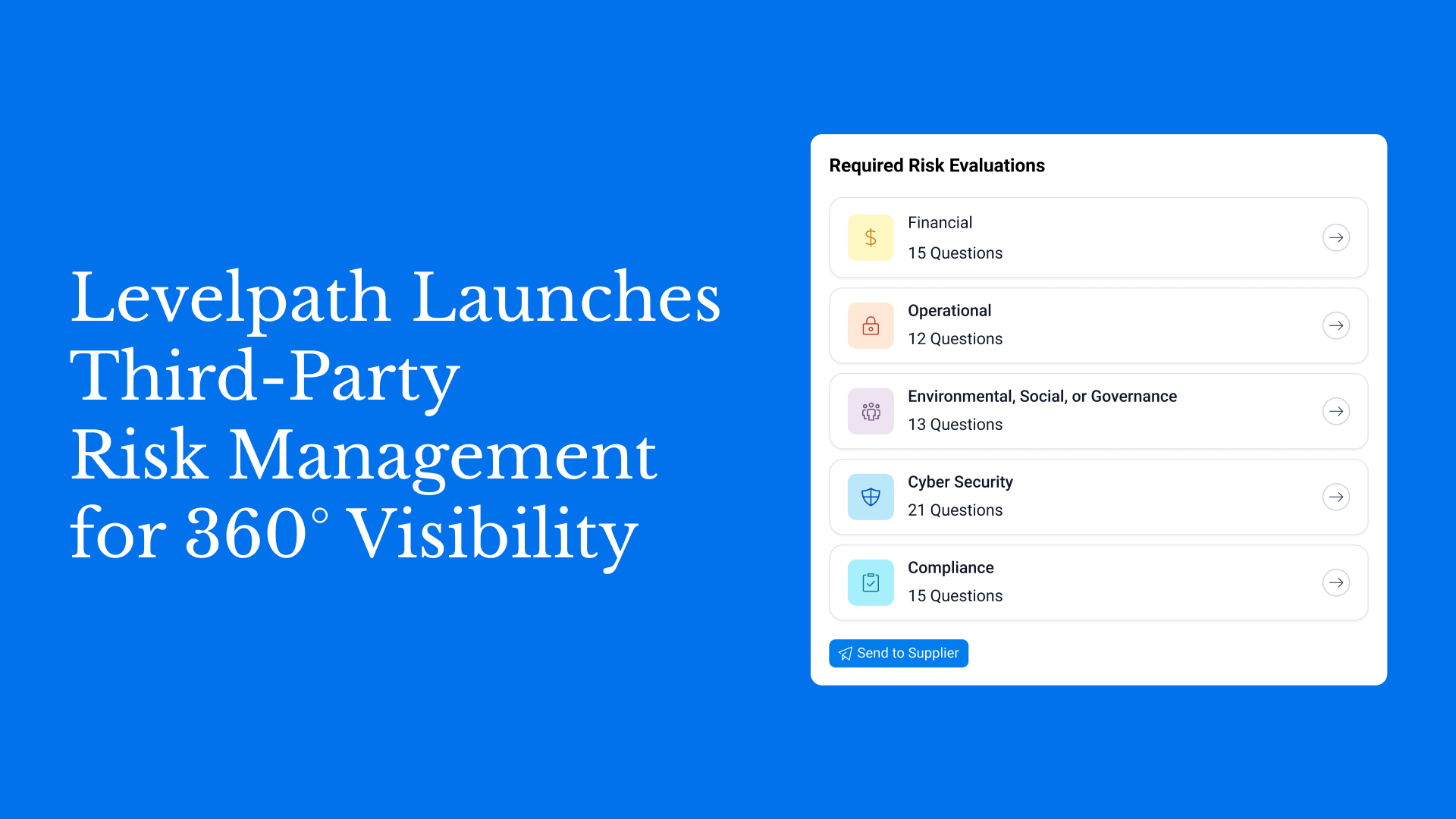
Nearly every procurement leader plans to spend more on AI, but only 2% have it embedded at scale.
Autonomous sourcing takes a plain-language request all the way to a scored RFP and award recommendation, while people keep the final decisions.
Teams see more capacity for procurement strategy, 3 to 6% savings on external spend for finance, and no rip-and-replace for IT.
The gap between AI investment and AI at scale
Procurement teams are buying AI solutions faster than ever. But the ROI of AI has yet to match the effort and investment required to deploy it.
That is the picture in McKinsey's October 2026 survey of chief procurement officers, which we shared in our latest newsletter. They report that nearly every leader plans to increase AI spending over the next 18 months. Yet, only 2% have AI embedded at scale.
The big takeaway: The teams capturing real value are redesigning their workflows around where human judgment is still needed. In the background, agents speed up single tasks like drafting documents or summarizing contracts so the entire process becomes more efficient.
The biggest value-add comes through competitive sourcing. Every procurement team knows competitive sourcing events save money, but most hesitate to start one because the event itself is expensive to run.
While the appetite for savings is there, the constraints of the process are holding it back.
Here is what competitive sourcing looks like when that constraint comes off:
From plain-language request to award recommendation
A sourcing event starts the way a conversation with a good buyer would: by someone describing what they need. Here's how the process goes in Ranger, Levelpath's autonomous procurement platform:
A requester submits the need through the AI Front Door or Slack in plain language, with no form to fill out.
The requester answers follow-up questions a buyer would ask (sites, service levels, current contract), then builds the requirement set.
Ranger identifies relevant suppliers and pulls them into the event.
The full RFP, including the questionnaire, pricing sheet, scorecard, and supplier invitations, is built out, ready to send.
When bids arrive, each response is scored, and an award is recommended.
Whether it's approving the supplier list, adjusting the scorecard weights, or reviewing the recommendation at the end, the category manager steps in as much or as little as needed. The work that made sourcing expensive (forms, chasing, and spreadsheet comparisons) is gone. Judgment stays with the person.
The level of autonomy in Ranger scales according to the job being done. Routine purchases and tail spend can run nearly end-to-end on their own. Meanwhile, a large strategic event uses the same agent for the preparation and keeps every decision with the category manager.
Then why keep decisions with a person at all?
Procurement manages real money and risk. Judgment is the part of the job that needs to stay with humans.
Why this only works in one system
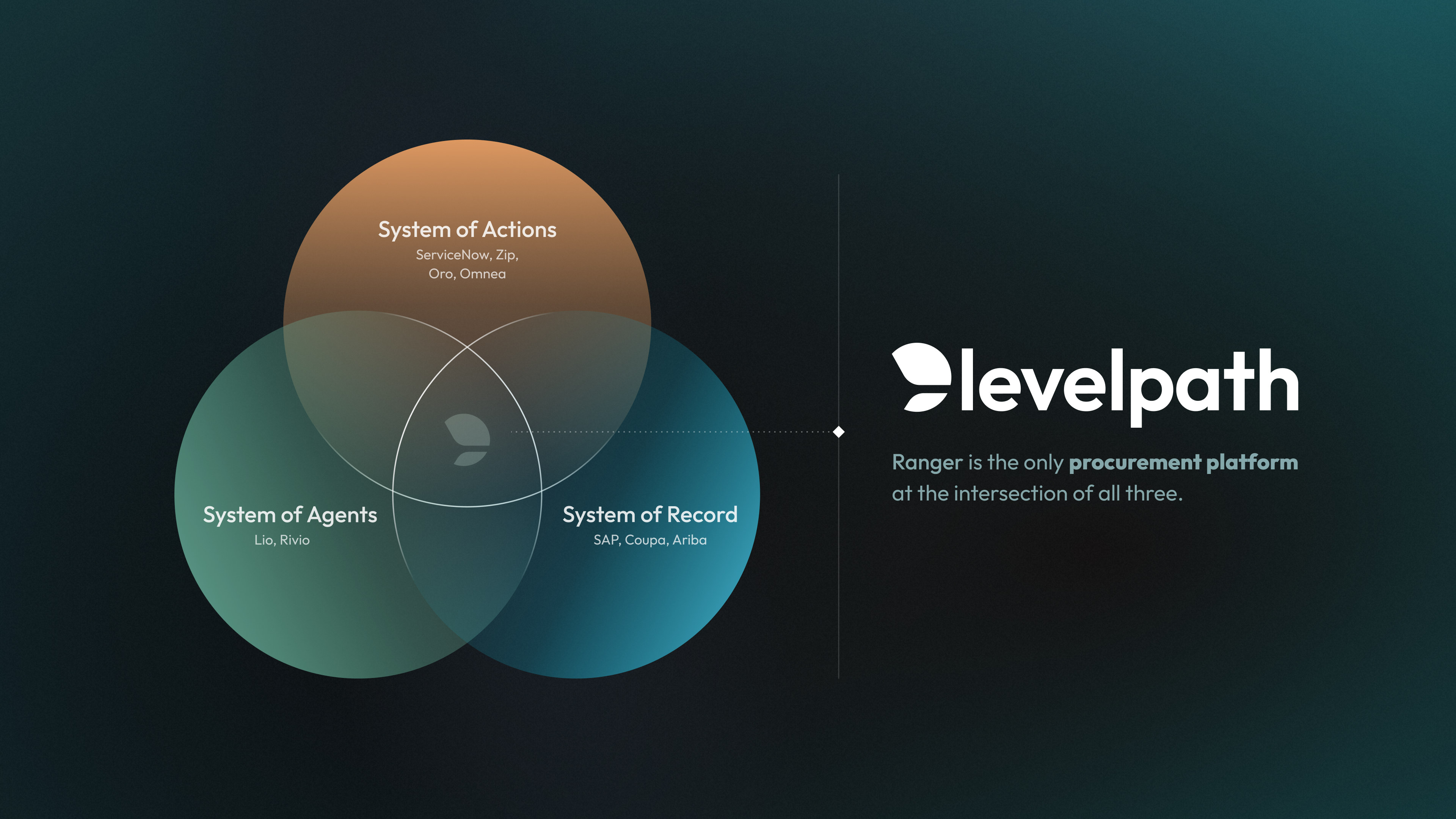
This only works in a consolidated system because agentic capabilities rely on seeing the same suppliers, contracts, spend, and definitions.
The research from McKinsey echoes that sentiment. They report that quality commercial decisions depend less on any single AI model than on whether every agentic capability sees the same commercial picture.
The shared picture separates a system that decides from a set of tools that answer.
Here's the difference:
Set of tools and answers: An agent bolted onto a standalone intake tool cannot defend an award recommendation, because it cannot read the policies, the supplier record, and the past awards the recommendation depends on. The answer is to build that shared foundation yourself. However, that can cost millions of dollars for a mid-size organization once data foundations, controls, and change management are counted.
A system that decides: This sets the foundation. Record, intelligence, and action live in one place. The agent can build a requirement set from your sourcing policies, templates, and past awards, and show the reasoning behind the award it recommends.
Wondering what camp Ranger is in? When we built the autonomous sourcing function, we decided every agent would share the same requirements and supplier history so every decision and workflow was grounded in the same data.
What the business gets
A sourcing event that runs itself pays off for everyone:
Procurement - More upstream capacity
Requirement gathering, chasing, and spreadsheet comparisons go away. The same team runs far more events and spends its time on the decisions that require human judgment, like supplier strategy, negotiation, and exceptions.
Finance - Less external + tail spend
External spend typically runs 30 to 60 percent of operating expenses. Agentic AI pointed at sourcing decisions adds 3 to 6 percent savings on that spend, which is roughly 11x more value than automating the procurement function.
In addition, tail spend stops slipping through. In one case, a tier-one automotive supplier pointed agents at $150 million of fragmented tail spend across more than 1,000 suppliers and captured over $5 million in savings in under six weeks.
IT - No rip and replace
The McKinsey survey found that data quality and system integration are the two biggest barriers to a return on AI investment. That's why it's so necessary for fewer systems to carry the data.
Ranger's AI Front Door does just that. It sits in front of existing systems. No software has to get replaced, and requests flow through to the systems already established. The agent operates inside defined boundaries, following the same permissions, approvals, and audit trails as the people it works beside.
What's next?
Annual category planning assumes sourcing is expensive, so teams ration it. Once events run themselves, however, rationing stops making sense. Instead, strategy becomes a response to evidence. Renewal windows open, price indexes move, new suppliers clear qualifications, and events run automatically.
This is the job Ranger was built for from the start: minimizing the very manual and expensive parts of sourcing and leaving the judgment to the professionals. Remove that cost, and competition reaches every dollar of addressable spend.
We think that is the version of agentic AI worth the investment procurement leaders are planning to make. The world where strategic sourcing had to be rationed is already getting smaller.
Autonomous sourcing is a sourcing process run by AI agents from intake through bid scoring and award recommendation. People set the objectives, approve key steps, and make the final decision.
Can a requester start a sourcing event without a form?
Yes. In Ranger, a requester describes the need in plain language through the AI Front Door or Slack, and the AI Agent asks the follow-up questions a buyer would ask.
How does the agent recommend an award?
It scores every bid against the event's scorecard, ranks the suppliers, and recommends an award with a short rationale. The decision stays with a person.
What can the AI agent do without a human?
The agent builds the event, invites suppliers, and scores bids on its own. Award decisions and anything that commits spend wait for a person.