



"This contract expires in 30 days. The vendor's quarter ends in 12. Here's what I recommend." The message shows up in Slack on a Tuesday morning with the analysis attached — renewal terms, usage trend, three options priced out. Nobody asked for it. Nobody set a reminder. An agent was watching the contract, and it started the work before anyone knew there was work to start.
That's the moment procurement changes. For decades, procurement software recorded your work and waited for you to do it — even the newest copilots only help when you ask. What's new is an agent that owns the workflow: it watches, it acts, and it brings you the decisions that deserve a human. It isn't waiting for instructions. It's already on it.
Two weeks ago, Levelpath launched Ranger, the first AI platform built for autonomous procurement. Not a copilot bolted onto a system of record, but a completely new platform where agents run entire workflows end to end. Today, we're launching five distinct autonomous procurement workflows that Ranger can run end-to-end. To truly understand what makes Ranger different, it helps to understand the levels of autonomy — and where a platform sits on that ladder changes everything.
The Four Levels of Autonomy for Procurement Workflows
Autonomy in procurement works like autonomy in cars: driver assistance keeps you in your lane, and a self-driving car takes the route. Procurement has the same ladder, and the level describes how much of the workflow an agent owns and which decisions stay with you.
- Level 0, no automation. Manual work with no AI in the loop: spreadsheets, inboxes, and whoever remembers.
- Level 1, AI assisted. The agent helps with a few steps when asked, and a human runs the workflow. Drafting a supplier email or summarizing a contract sits here. Most AI procurement platforms sit here today.
- Level 2, largely automated. The agent owns the workflow. It runs the happy path end to end and watches for work to do, and a person approves the decisions that carry weight. Renewals, invoice processing, change orders, and requisition checks run at this level.
- Level 3, fully automated. The agent runs the whole workflow continuously, exceptions included, with no one in the loop. Supplier and contract cleanup, accruals, and burndown alerts live here — high volume, rare judgment calls.
You choose the ceiling for every workflow. Some categories should be fully autonomous, and some never should be. That would be your call, not the software's.
Where Agentic Procurement Stops and Autonomous Procurement Begins
Most procurement platforms today offer agentic procurement: hard coded agents bolted onto a system built to record work. That's level 1, and it's where the market sits right now.
Level 2 is a structural leap. An agent can only run a workflow end to end when it can see everything the workflow touches: the contract, the supplier, the spend, the policy, the risk — all in one place. A bolt-on agent cannot. Ranger was rebuilt from the ground up so its agents can. Autonomous procurement is levels 2 and 3, and Ranger runs there today across sourcing, contracts, supplier onboarding, risk review, and invoice processing. Here's what that feels like.
"This contract expires in 30 days. Here's what I recommend."
Ranger computes the notice window on every contract from the end date and the termination notice period, launches the renewal review 30 days ahead of expiry on its own, and can trigger early when conditions favor you, such as a vendor's end of quarter or a drop in usage. It recommends renew as is, renegotiate, terminate, or do nothing — each with a rationale. Low-value tail contracts can renew without a person. On a six-figure contract, the stakes are too high for autopilot: every path reaches the owner, with the analysis already done and time still on the clock to act. A renewal never sneaks past anyone again.
%401x.png)
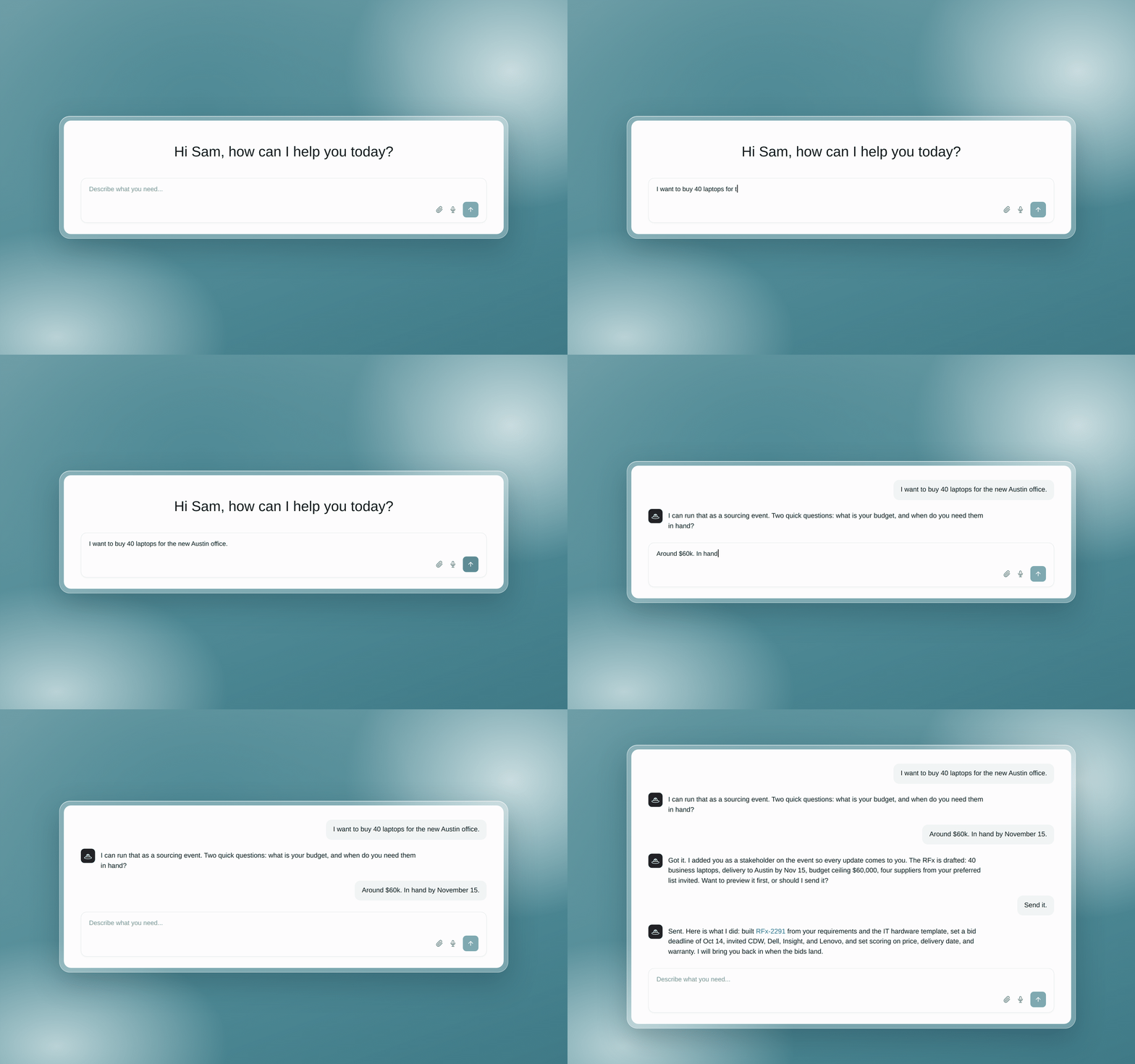
"Tell me what you want to buy. I'll build the event."
A stakeholder asks for what they need. Ranger clarifies budget and timing, then builds the event: the questionnaire, the pricing sheet, the weighted scorecard, and the supplier invitations. As bids arrive, Ranger scores each bid against what suppliers actually submitted and recommends an award. Handing the decision over to the sourcing manager to make.
"Matched, approved, and pushed to NetSuite."
Forward an invoice and Ranger takes it from there: it checks for duplicates, then matches three ways against the purchase order. Invoices that match cleanly can clear approval without a person, and an approved invoice pushes to your ERP as a vendor bill automatically. Exceptions reach a person with the evidence attached — they make the judgment call. As they should.
%401x.png)
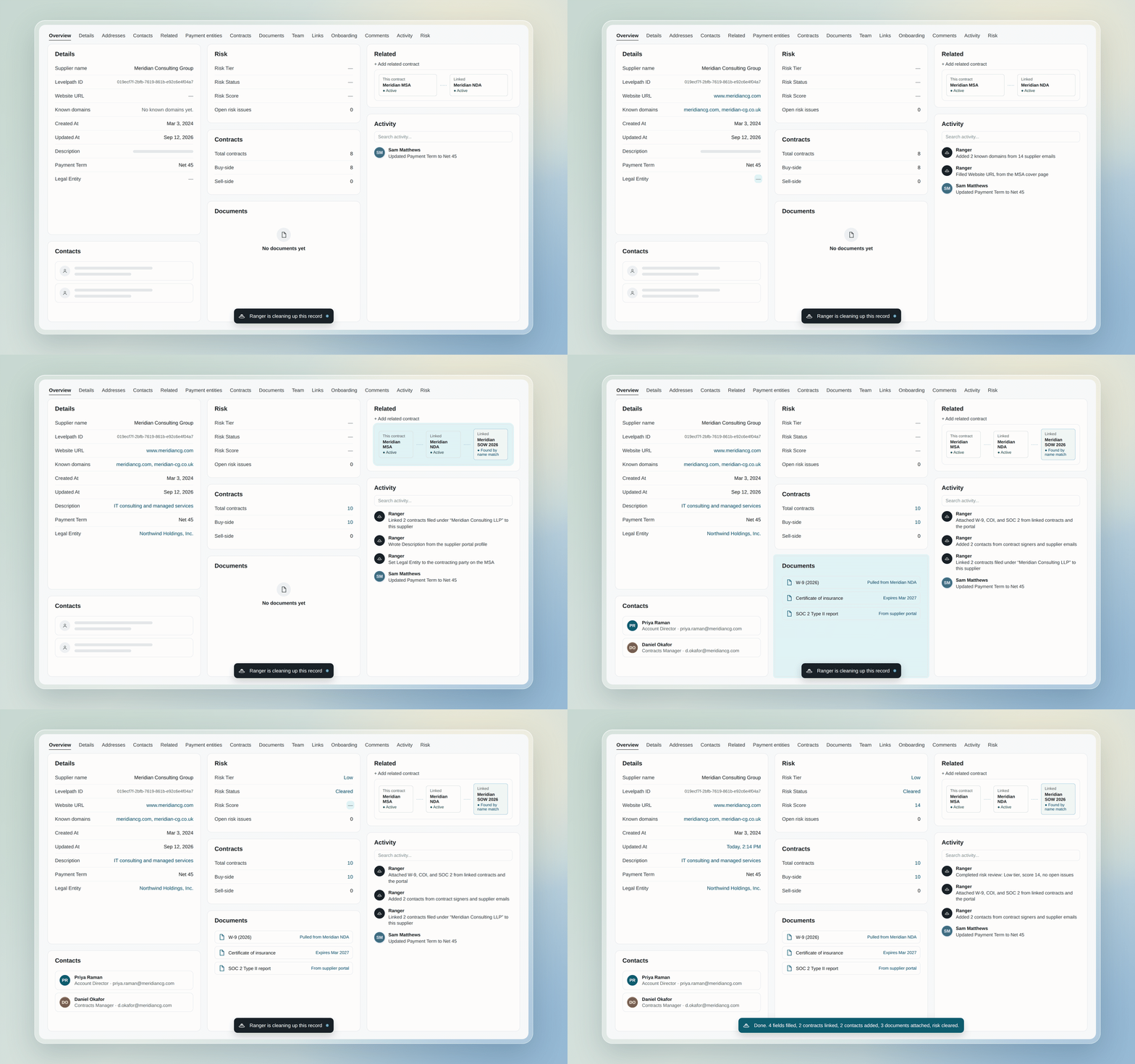
"I cleaned up the supplier records while you were in meetings."
Supplier record cleanup, contract data cleanup, accruals, and burndown alerts run continuously with no one in the loop, exceptions included. Level 3 is for high-volume work with rare judgment calls. Places where nobody wants to spend their day.
And these are just a few of the pre-built autonomous workflows. Ranger Studio lets anyone describe an agent and workflow in plain language and put it to work in seconds.
You Set the Ceiling. Ranger Earns the Trust.
With agents, trust is everything. Trust is what makes Ranger different. Every agent action lands in an append-only log, attributed to the agent. An auditor can always tell an automatic approval from a human one. An agent holds strictly less authority than the person it acts for: it can approve, but it structurally cannot reject. Your agent can say yes for you. It can never say no for you. And agents can be turned on and off at each step of every workflow.
None of this shrinks a procurement team. Ranger hands procurement back its real business: negotiations, supplier relationships, and complex deals. Agents carry the routing, the chasing, and the status checks.
How to Get Started With Ranger
In a world where every company has access to the same intelligence, the advantage goes to the teams that put it to work first. No other function touches more of the company's spend, suppliers, and risk. Ranger is how procurement leads that change instead of chasing it.
Our team would be delighted to set up a meeting to show you how Ranger can run procurement end-to-end.