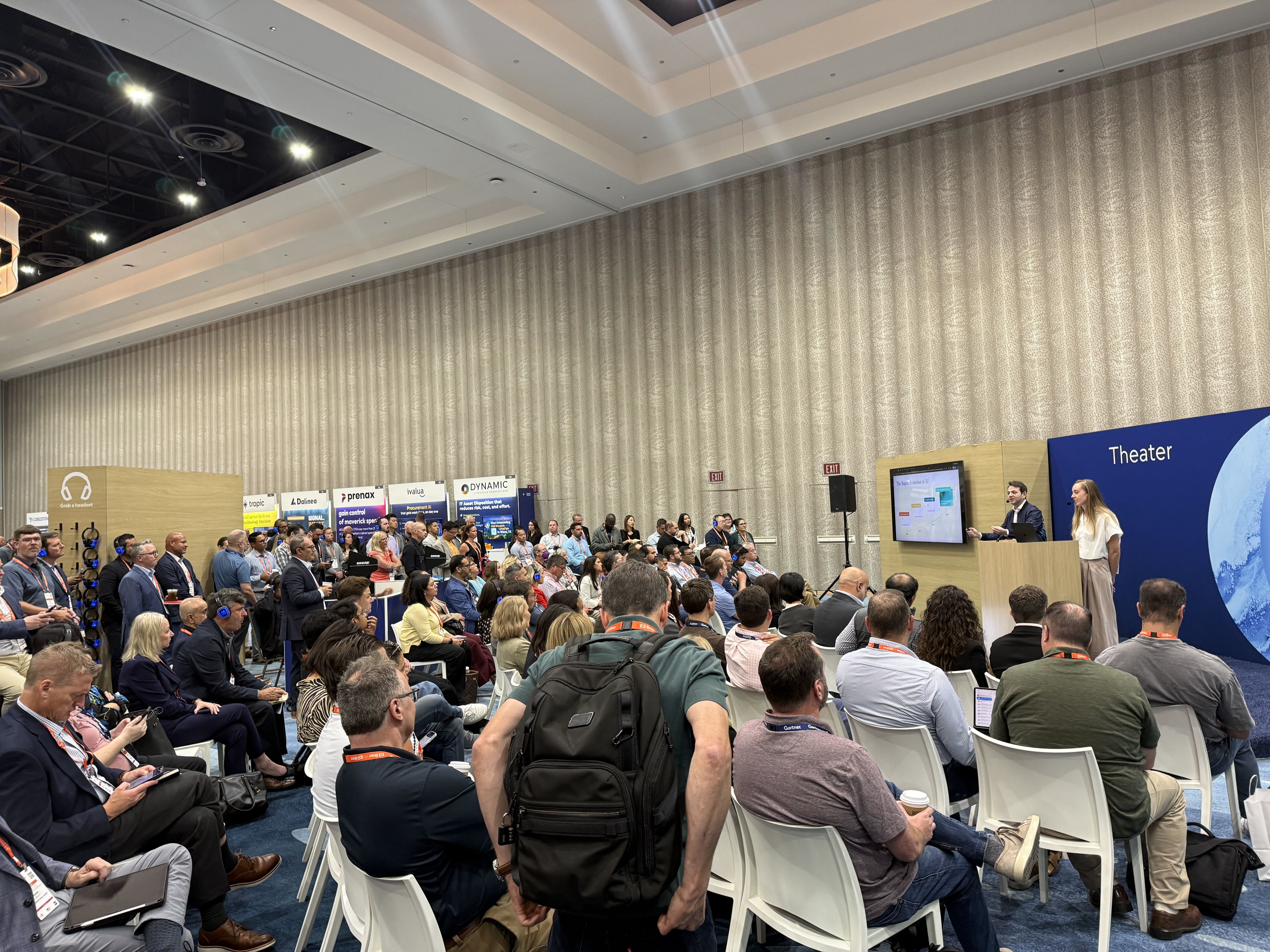
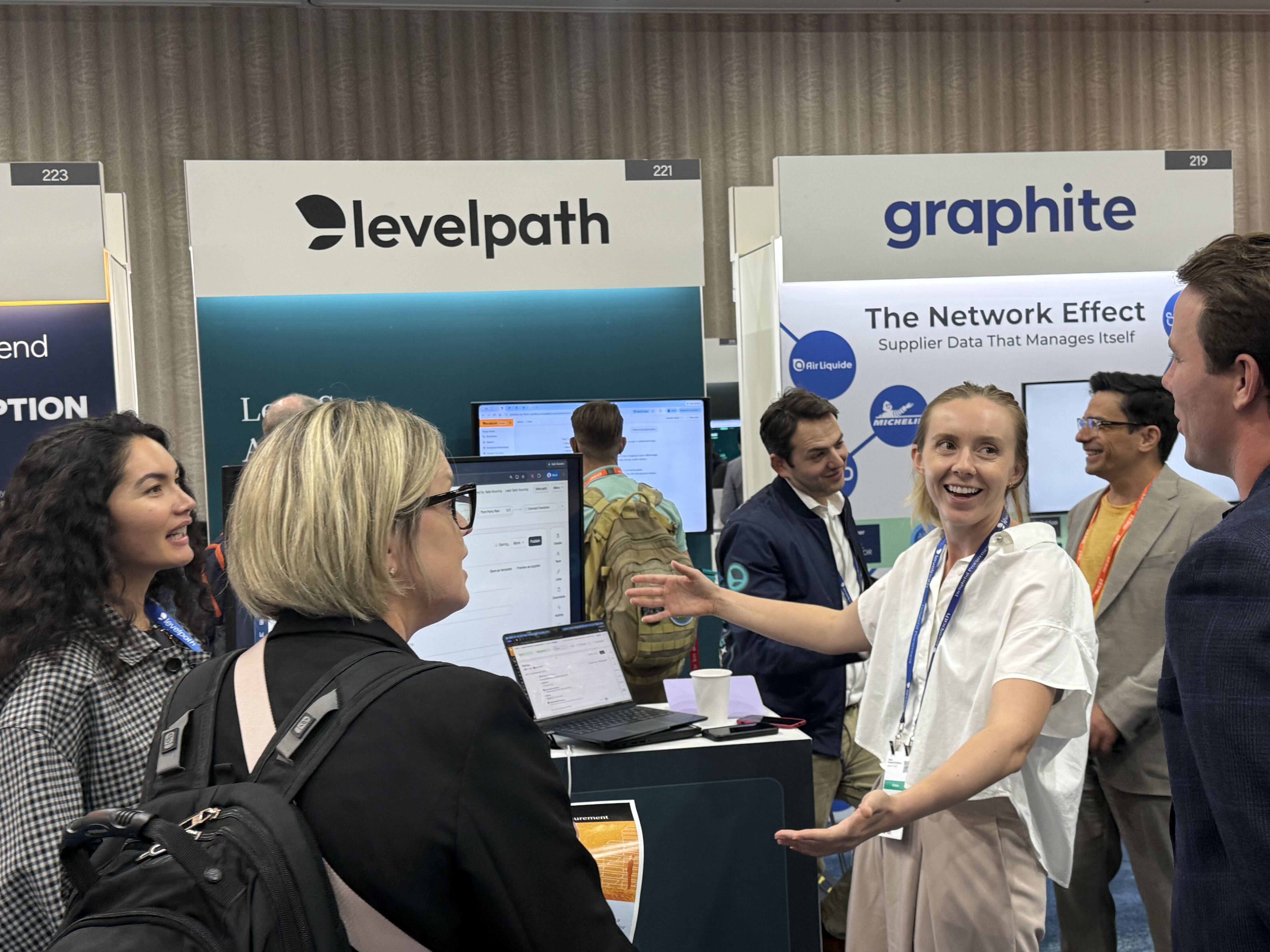
We came to the Gartner Procurement Conference ready to show what Autonomous Procurement looks like in practice. Everyone else came ready to see it. This was our first conference since introducing Ranger, and the response told us the market is ready. The session filled to standing room only, and conversations at the booth ran for two days without a break. Nearly every one of them started the same way. Show me what the agents can actually run on their own.
That question is the story of the session. Every role in procurement carries a list of jobs, and one by one, on stage, each of those roles got a teammate to take them on. Thank you to the Gartner team for a wonderful event, and to everyone who stopped by to see Ranger for themselves.
The Agentic Org Chart, In Action
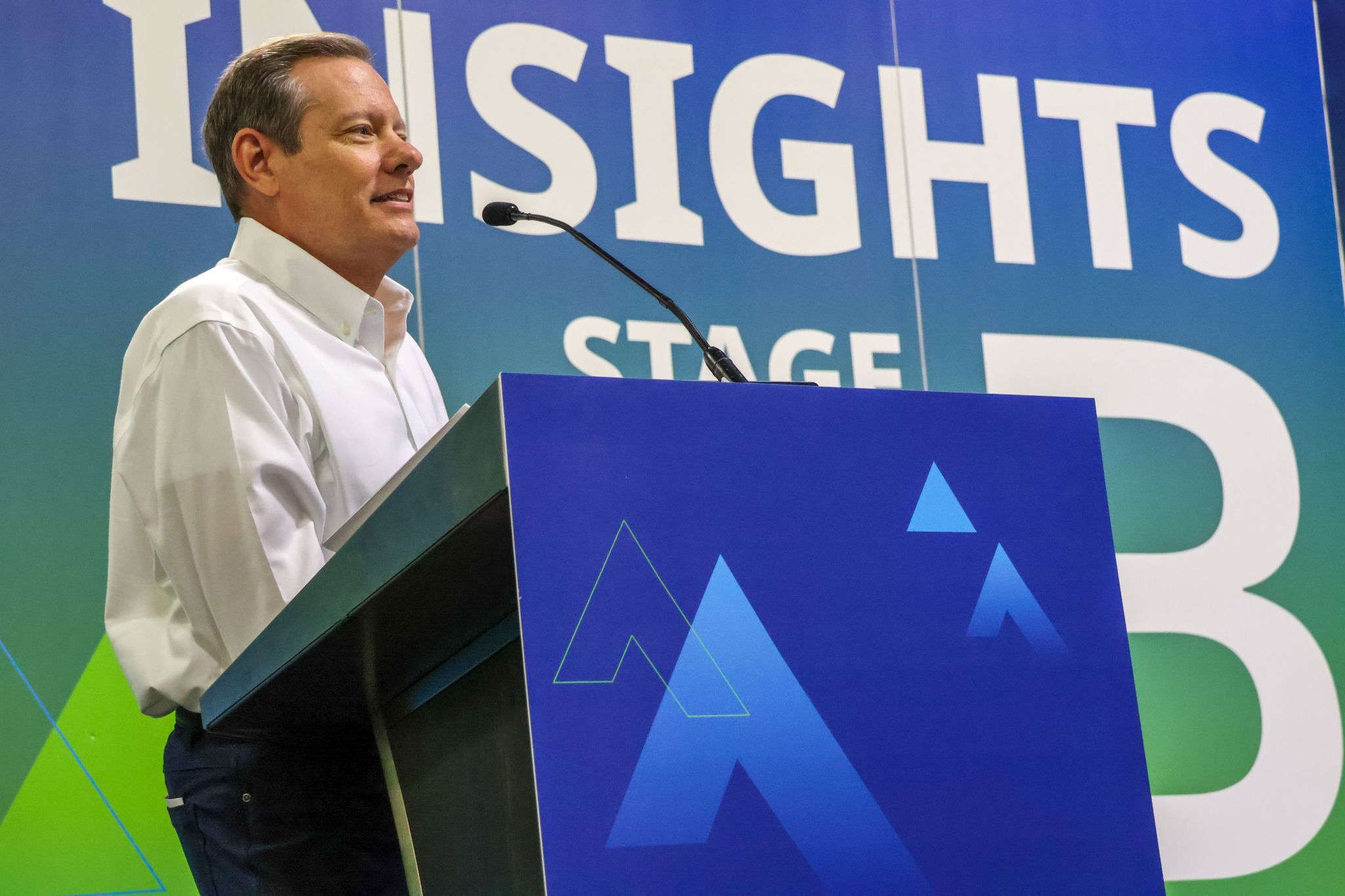
Stan Garber, Levelpath Co-Founder and President, opened with the shift that has happened in less than four years. In 2023, AI answered questions. In 2024, it helped with tasks. In 2025, it completed them. In 2026, it takes autonomous action, and the jump in the last six to nine months has been the sharpest yet.
Stan framed what that means for a procurement organization. Every procurement process carries a long list of jobs: routing requests for approval, chasing supplier documents, re-keying data between systems, explaining a delay, reconciling a purchase order to an invoice, and building the dashboard someone asked for last week. Those jobs are the ones AI agents are ready to own.
Libby Sestak, Head of AI Solutions and Enablement, then did what the room came for. She skipped the slides and gave every function in procurement a new teammate, live.
Leaders and Stakeholders Got Answers Without Waiting
The first agent on the org chart belongs to the leader. Libby asked, in plain language, for a dashboard built for a CEO audience and focused on contracts with no evergreen agreements. The agent asked a clarifying question, proposed a layout, and built it while she kept talking to the room. She gave it feedback, asked for the KPIs at the top, and the dashboard adjusted. No queue behind an analyst, and no pivot tables.
Stakeholders got their own answer path through the AI Front Door, where a question is asked in natural language rather than entered into a form. Someone with a question about an invoice can simply ask for the status and receive it, along with a direct route to the document. There is no ERP login, and there is no message to the accounts payable team.
Intake works the same way. Libby uploaded a contract and every field on the request form populated on its own, standard fields and custom fields alike, the pattern Levelpath calls AI intake and prefill. Stakeholders submit complete, accurate requests without typing them.
Sourcing Went From Blank Page to Scored Responses
Sourcing managers got the RFx builder. Starting from a blank questionnaire, Libby described what she wanted, a request for proposal questionnaire for project management software with a matching evaluation scorecard. Seconds later she had both: full sections, varied question types, and a scorecard tied back to the questionnaire. That is an afternoon of thoughtful work returned to the team.
Then the room time traveled a few weeks, past publication and supplier responses. Suppliers had replied the way suppliers actually reply, in a mix of Excel files and PDFs. The analysis agent read every response and returned a side-by-side comparison in the exact format Libby requested. The AI evaluator followed, scoring every section for every supplier with a written explanation of each score.
This is the picture of Autonomous Procurement that landed hardest in the room. An agent can build the event, run it, read the responses, score them, and recommend a path forward. Stan noted that the demo was deliberately slowed down so attendees could watch each step, because teams can configure these agents to run straight through.
Legal and Operations Got a Head Start
Contract review came next. The clause review agent is trained on your playbook, and it compares every incoming contract against it. Each clause receives a verdict, and each flag comes with the location in the contract, the reason for concern, and proposed replacement language. Some customers run low-risk, low-spend agreements through it automatically, so contracts that clear every clause never reach a desk.
Libby also showed how an agent reconnects contracts with their families, the relationships that sit at the center of contract lifecycle management. Point it at a supplier, and it reads every related agreement to determine which document is the parent, which is the child, which amends another, and which statements of work belong where.
Procurement operations closed the session. Building workflows has historically meant manual point-and-click configuration. In Ranger Studio, Libby described a contract renewal workflow with the steps needed for a successful renewal, watched it build, and then asked for a VP approval step in parallel with finance and legal. The workflow adjusted immediately.
What Stuck With Us
The through line of every booth conversation was the same as the through line of the session. Procurement leaders are no longer asking whether agents can do the work. They are asking which work to hand over first, what the guardrails look like, and how to measure the results.
Libby framed the answer well on stage; some agents take work off your plate entirely, and some augment the work you do today. Both give the time back to the part of the job people were hired for: negotiation, strategy, and the relationships that hold supplier performance together.
That is what Autonomous Procurement makes possible, and it is running in production today.
What did Levelpath present at the Gartner Procurement Conference 2026?
Levelpath presented The Agentic Org Chart, In Action at the Gartner Procurement Conference in San Diego in September 2026. Stan Garber, Levelpath Co-Founder and President, and Libby Sestak, Head of AI Solutions and Enablement, demonstrated Ranger agents live across dashboards, stakeholder questions, request intake, sourcing, contract review, and workflow building.
What is the agentic org chart?
The agentic org chart describes giving each role in a procurement organization its own AI agent, in the same way a team is staffed with people. A leader gets a dashboard agent, a stakeholder gets the AI Front Door, a sourcing manager gets an RFx builder and an evaluator, legal gets a clause review agent, and procurement operations gets a workflow builder.
Which procurement roles got an AI agent in the session?
Five roles were staffed live. Leaders received a dashboard agent that builds and revises reporting from a spoken request. Stakeholders received the AI Front Door for status questions along with automatic intake prefill. Sourcing managers received an RFx builder, a response analysis agent, and an AI evaluator. Legal received a clause review agent and a contract relationship agent. Procurement operations received a workflow builder in Ranger Studio.
Can procurement agents run without a person watching each step?
Yes. Stan Garber told the room that the demo was deliberately slowed so attendees could watch each step, and that teams can configure the same agents to run straight through. Thresholds, guardrails, and approval routing stay with the procurement team, so agents act inside boundaries people define.
What outcomes does an agentic org chart deliver?
Reporting arrives without an analyst queue. Stakeholders get status answers without contacting procurement. Sourcing teams run more events without adding headcount. Legal reviews contracts that are already analyzed, with low-risk agreements clearing on their own. Procurement operations changes a workflow by describing it. The consistent outcome is time returned to negotiation, strategy, and supplier relationships.