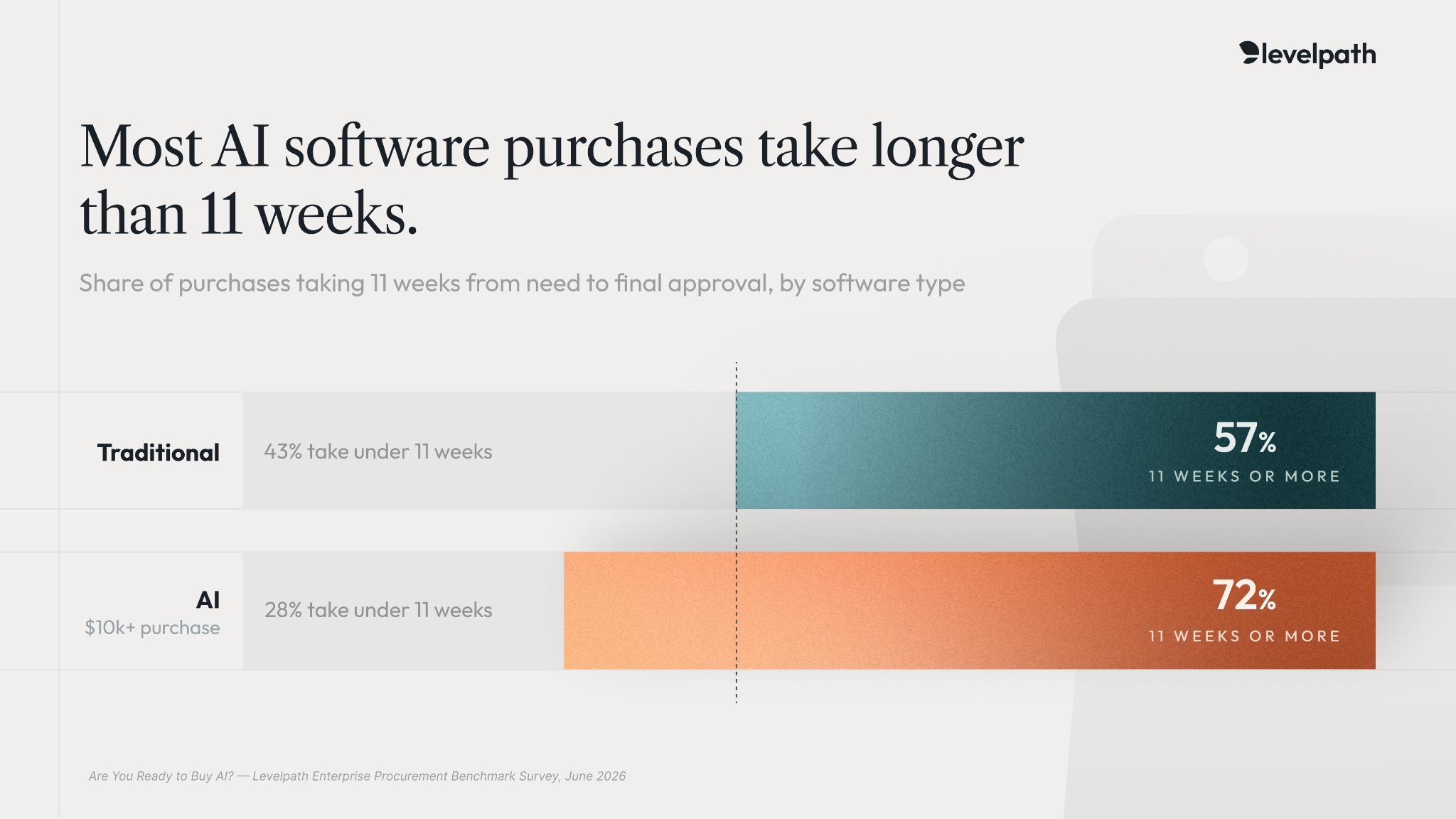
Every software buyer has a rough sense of how long a purchase should take. Levelpath's new survey of enterprise software buyers gives you a benchmark to check it against. 7 to 10 weeks is the most common single timeline, yet most purchases run longer: 57% of traditional software purchases take 11 weeks or more.
AI purchases push that timeline even further out. 72% of AI purchases over $10,000 take 11 weeks or more, compared with 57% of traditional ones. AI is not necessarily harder to purchase, but it runs into more of the same friction: more people, more reviews, and more reasons to stall.
This graph shows the increased timeline for AI software purchases, based on data from Levelpath's recent survey.
More People and Reviews Slow Purchases
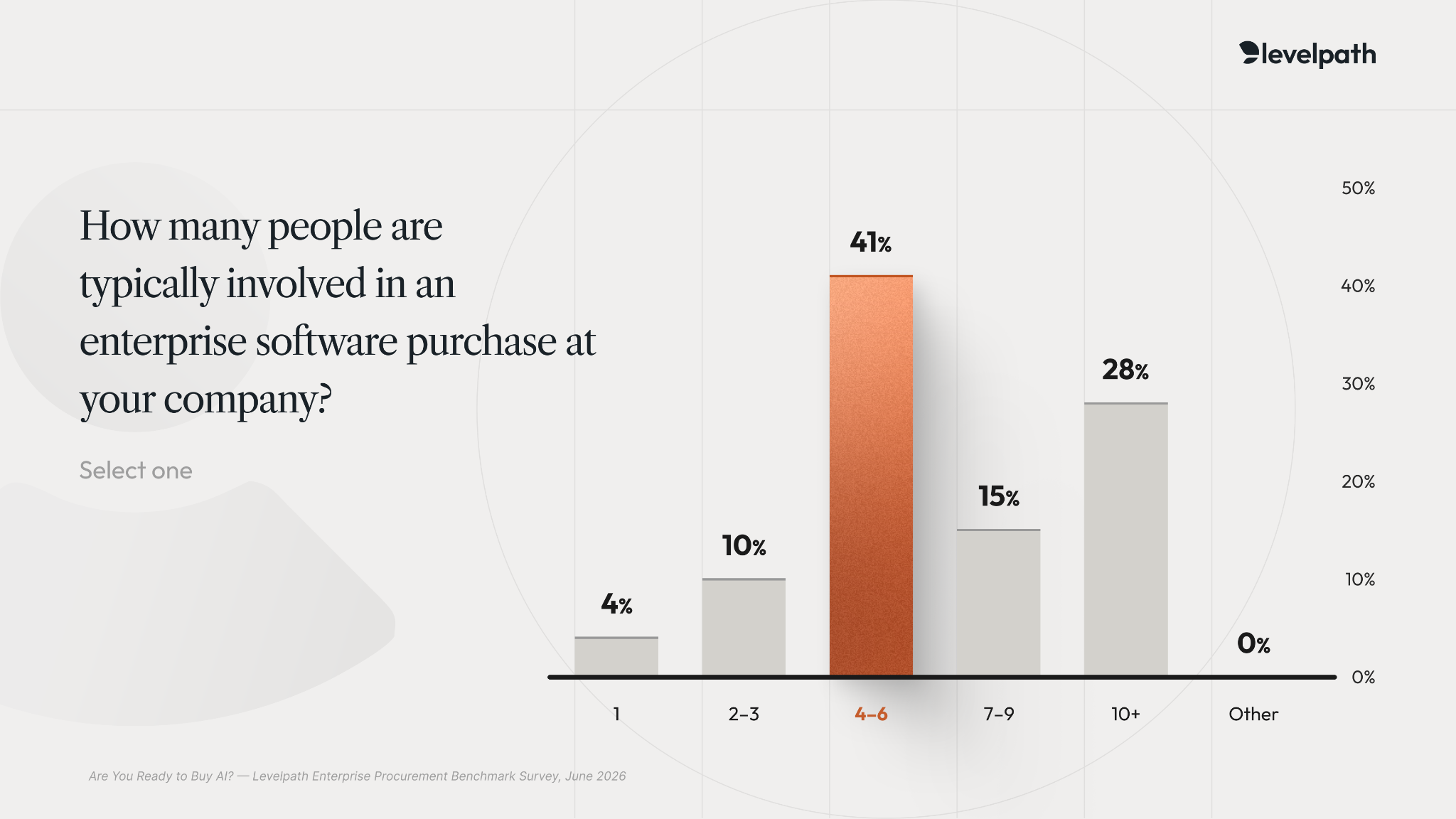
How many people touch your software purchases? If it’s between 4-6, you align with the typical range for 41% of buyers. Overall, the vast majority of respondents have more than 4 people involved in their software purchases over $10k. AI purchases seem to involve even more stakeholders: 58% of buyers involve seven or more people, and 28% involve 11 or more.
This graph shows that many respondents in Levelpath's latest survey report having 4-6 people involved in software purchases.
Each reviewer adds another place to stall. These are the checkpoints buyers say most often delayed or derailed a purchase in the past year:
• Security review: 58%
• Vendor evaluation: 57%
• Changing needs that force a rescope: 56%
• Contract review: 54%
• Contract negotiations and internal disagreement: 52% each
These are valuable things to address in a software purchase, but they can significantly slow down the procurement process. AI raises the stakes on the slowest of them: security reviews take longer when a tool routes sensitive data through a model, and changing needs are almost a given in a category that updates faster than any other technology.
Suppliers Are Often Left Without Updates During Delays
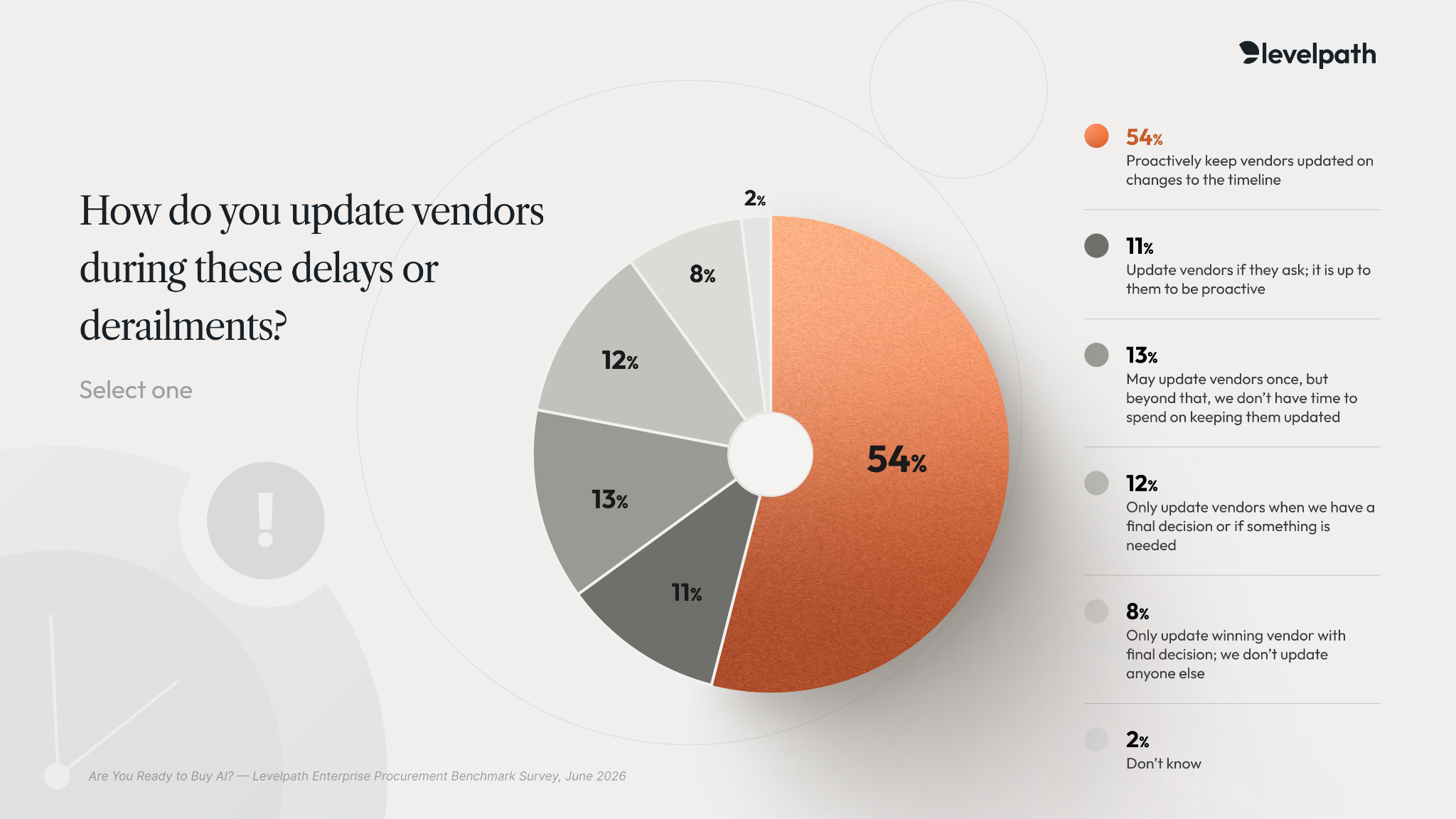
Most of the procurement work happens internally, even during delays, and suppliers don’t always hear how it is going. Only 54% of organizations proactively keep vendors updated when a timeline slips. When taking into consideration the 16-week AI cycle, the silence can go on for months. A short, scheduled update is one of the simplest ways to keep supplier relationships strong while the purchasing process plays out.
This graph highlights that only a slight majority of procurement teams update vendors proactively as purchasing timelines change.
AI Is Reshaping the Build vs. Buy Decision
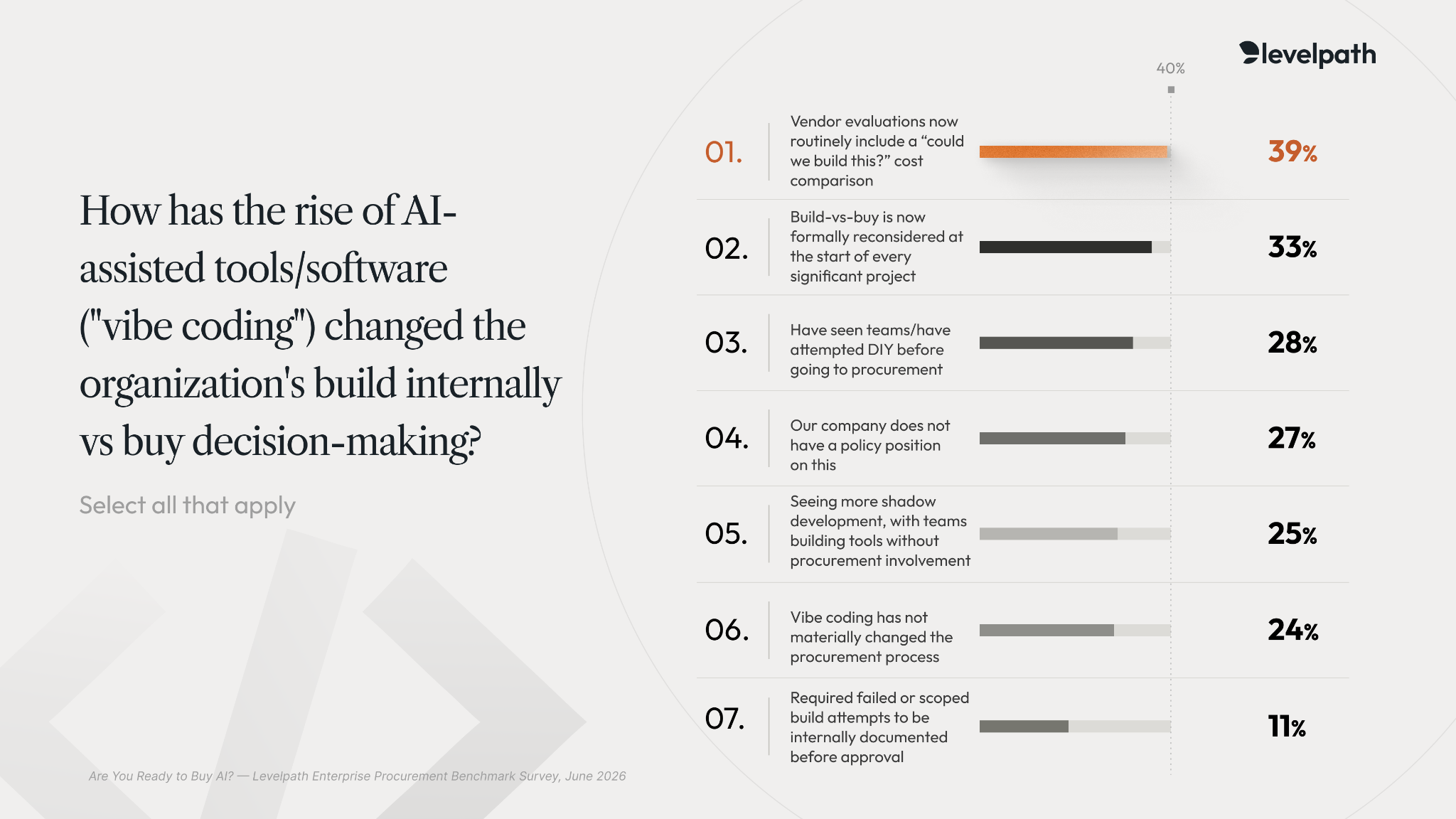
AI-assisted development has put a new question inside the procurement process: could we just build this ourselves? The question gets asked outside the process too. 28% of buyers have seen teams attempt a do-it-yourself build before coming to procurement, and 25% report shadow development, where teams build AI tools with no procurement involvement at all.
39% of buyers now include a “could we build this?” cost comparison in vendor evaluations, and 33% formally reconsider build versus buy at the start of every significant project. The opportunity here is for procurement to lead the build-versus-buy conversation with actual cost and risk data, rather than meet a homegrown tool after it’s already been built.
The data shows that many enterprise teams are considering if Build vs. Buy in their software decisions.
Do Buyers Trust an Agent to Buy on Its Own?
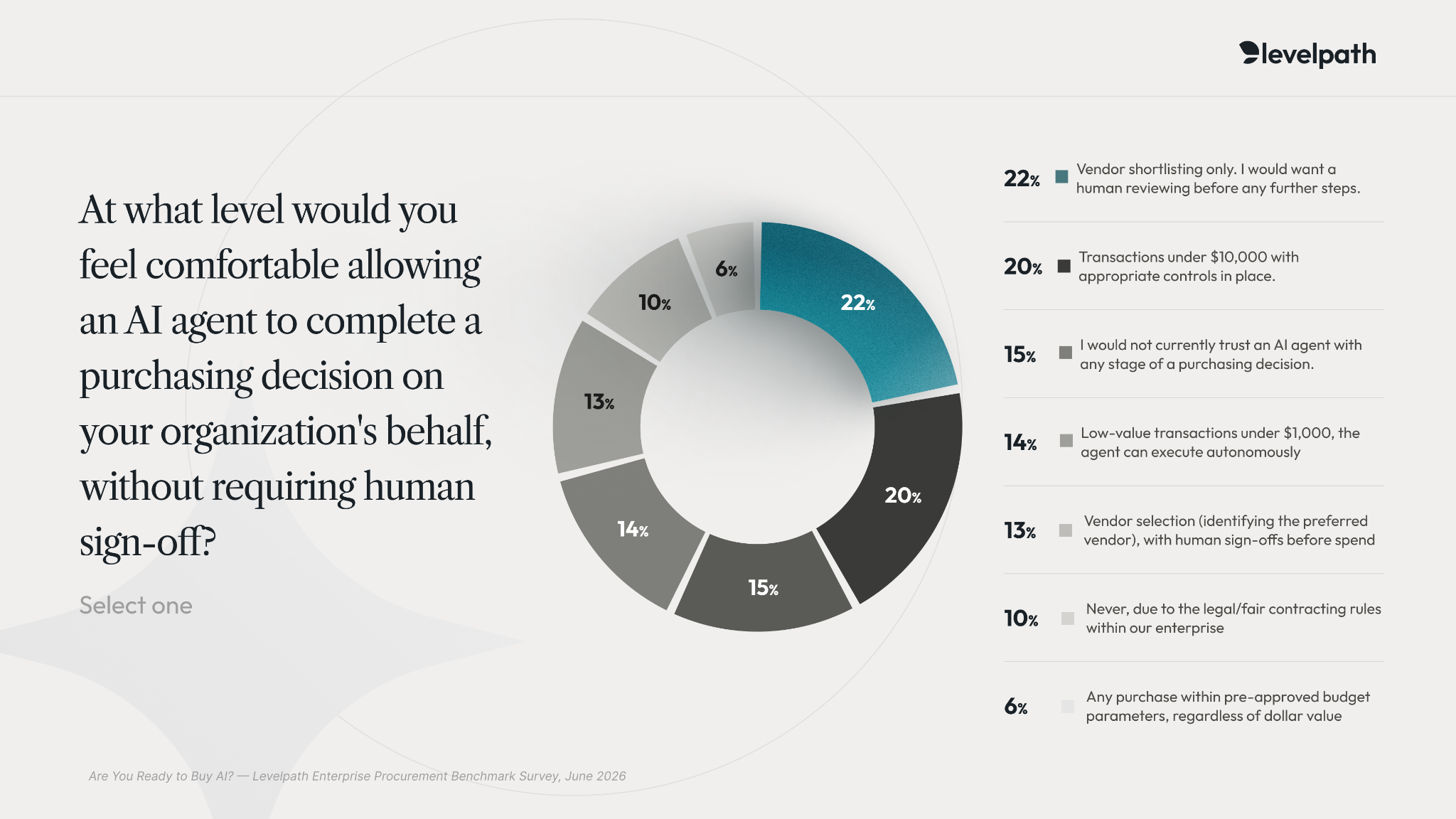
For all the change AI is driving, buyers are cautious about agents handling the purchase itself. The largest group, 22%, would let an AI agent handle vendor shortlisting only, with a human reviewing before anything moves forward. 20% would allow transactions under $10,000 with the right controls, and 14% would let an agent execute low-value purchases under $1,000 on its own. At the other end, 15% would not yet trust an agent with any stage of a purchase, and 10% have legal or fair-contracting rules that answer the question for them.
The pattern is consistent with everything above: buyers want AI that speeds the work and keeps a human involved for the decisions that carry real risk.
Most procurement professionals have strict guidelines on what they would allow AI Agents to do without human interference,.
What Does This Mean for Procurement?
Wherever you land in the range, the same actions will help to shorten the cycle. AI is raising the volume on every one of these dynamics, so the fix comes down to visibility and coordination:
1. Measure your own cycle. Compare your purchases against the median to see where you stand.
2. Bring reviewers in early. Pull security, legal, and key stakeholders in at the start through structured intake and orchestration, so reviews do not become the bottleneck.
3. Keep vendors informed on a schedule. A short, regular update protects the relationship and cuts the back-and-forth.
4. Put build versus buy on the record. A documented cost and risk comparison turns shadow development into a decision procurement helped make.
Visibility and coordination are what hold this together, which is the case for one system to run it. We built Levelpath so procurement teams can see every purchase, reviewer, vendor update, and contract in one place, keep timelines visible and stakeholders aligned, and let AI Agents do the administrative work so you can do the rest.
About the data: Findings come from “Are You Ready to Buy AI?”, a Levelpath benchmark survey of enterprise software buyers fielded in June 2026. Respondents work primarily in procurement and supply chain roles, mostly at organizations with more than 1,000 employees, and the AI findings reflect buyers involved in AI software purchases above $10,000 in the past year.